
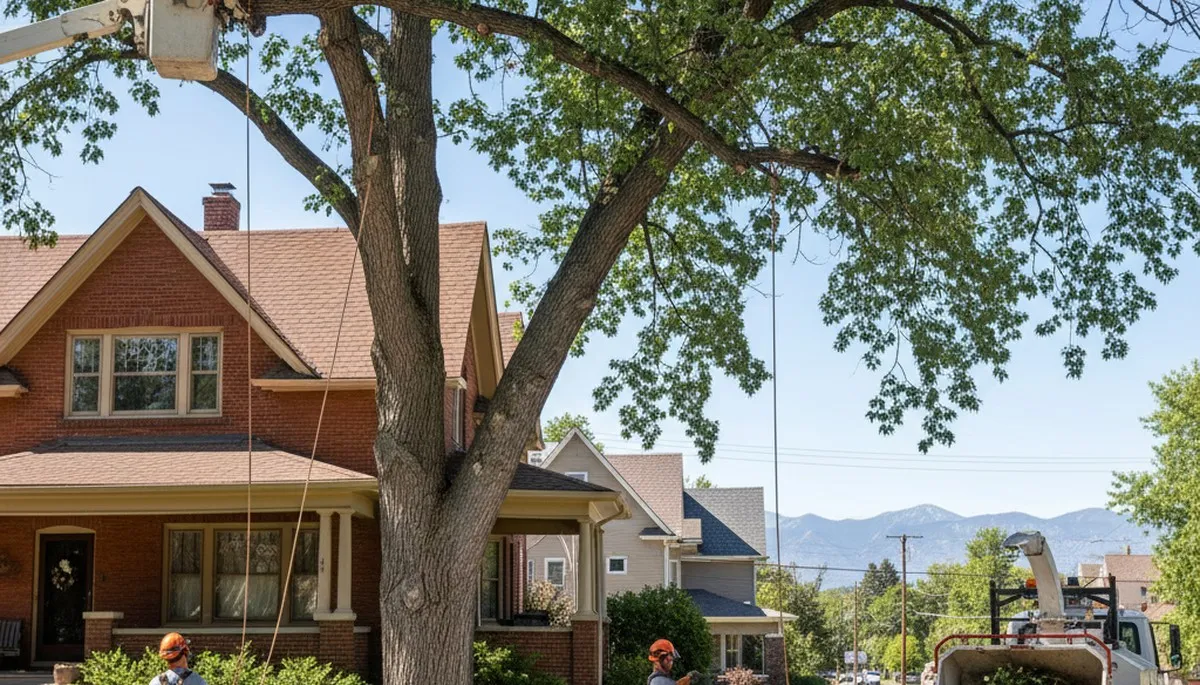
Denver’s residential streets include everything from compact bungalow lots in West Colfax to larger properties near Wash Park, and each setting brings its own access constraints and tree health concerns. Mature cottonwoods, elms, and ash trees are common across many blocks, and many now show decay, pest pressure from emerald ash borer, or root interference with older infrastructure. The tree care professionals in Thornton know how to inspect structural stability, manage heavy canopy growth, and remove dangerous limbs from properties while keeping them safe and accessible through Denver’s demanding urban tree conditions.
That is why so many property owners in Denver, CO, rely on Arbor Tree Care to help keep their trees and landscapes in good shape throughout the year.

Prefer to Talk to An Expert?
(303) 625-6875
Why Denver Property Owners Choose Local Pros
Because they work in this area every day, local professionals understand the mature canopy, varied lot layouts, and Front Range storm exposure that shape tree care in Denver. Every job is matched to the right tools and methods for local properties, including work affected by root intrusion, emerald ash borer damage, and strong wind loading.
From expert stump removal solutions along the narrow parkways of South Pearl Street to professional tree pruning services near the aging elm corridors of Congress Park, each project is completed with careful attention to detail and long-term property safety.
If you care about the condition of your property, local contractors can help keep your trees balanced, structurally sound, and safer in Denver’s mixed residential landscape.
Our Tree-Service Services
in Thornton, CO, Include
Tree Services Shaped for Denver Neighborhoods
Dense canopy cover and limited access routes mean tree care in Denver cannot be handled with a one-size-fits-all approach. Local professionals bring flexible solutions to each lot size, tree species, and seasonal condition found across the city.
Whether the property is a brick bungalow in Berkeley, a mid-century ranch in Virginia Village, or a newer infill home near the Platte River corridor, the work is adapted to the site.
Tree trimming, tree removal, stump removal, and emergency tree services are all planned around the neighborhood, the property layout, and the needs of the trees themselves.
Denver’s Mature Urban Forest Has Deep Roots
Denver expanded quickly in the late 1800s and early 1900s, when city planners lined streets with large trees such as American elms, green ash, and cottonwoods. That history still shapes the city today through aging roots, pest-affected canopies, and branches weakened by years of storms and drought.
Emerald Ash Borer Pressure and Ash Decline
Many Denver properties, especially in Hilltop, Park Hill, and Montclair, still have mature green ash trees facing ongoing emerald ash borer pressure. As the infestation advances, canopy dieback and structural weakening can happen quickly, creating hazardous limb drop risks over homes, fences, and sidewalks.
Local professionals respond with targeted insect treatments, selective crown reduction, and full tree removal when the tree can no longer be kept safely, helping reduce long-term liability concerns.
Cottonwood Roots and Older Infrastructure
Cottonwoods add shade to many older Denver neighborhoods, but their root systems can create major problems near aging infrastructure. Surface roots often crack sidewalks and interfere with buried utility lines, especially in areas developed before modern root barrier standards were common.
Professionals handle these issues with root protection assessments, selective root pruning, and removal when the root system has created unavoidable infrastructure risk, all while working with the clay-heavy soils found in much of Denver’s residential core.
Drought Stress and Dead Wood Buildup
Repeated drought cycles have left many Denver trees under stress, which often results in dead wood collecting throughout the upper canopy.
Trusted crews manage these trees with dead wood removal, fertilizing programs designed for Colorado’s semi-arid climate, and canopy thinning that supports better airflow, lower stress, and stronger long-term structure.
Front Range Storm Damage and Wind Failure
Denver’s Front Range location brings hail, wet snow, and sudden high winds that can break limbs or uproot entire trees on residential properties.
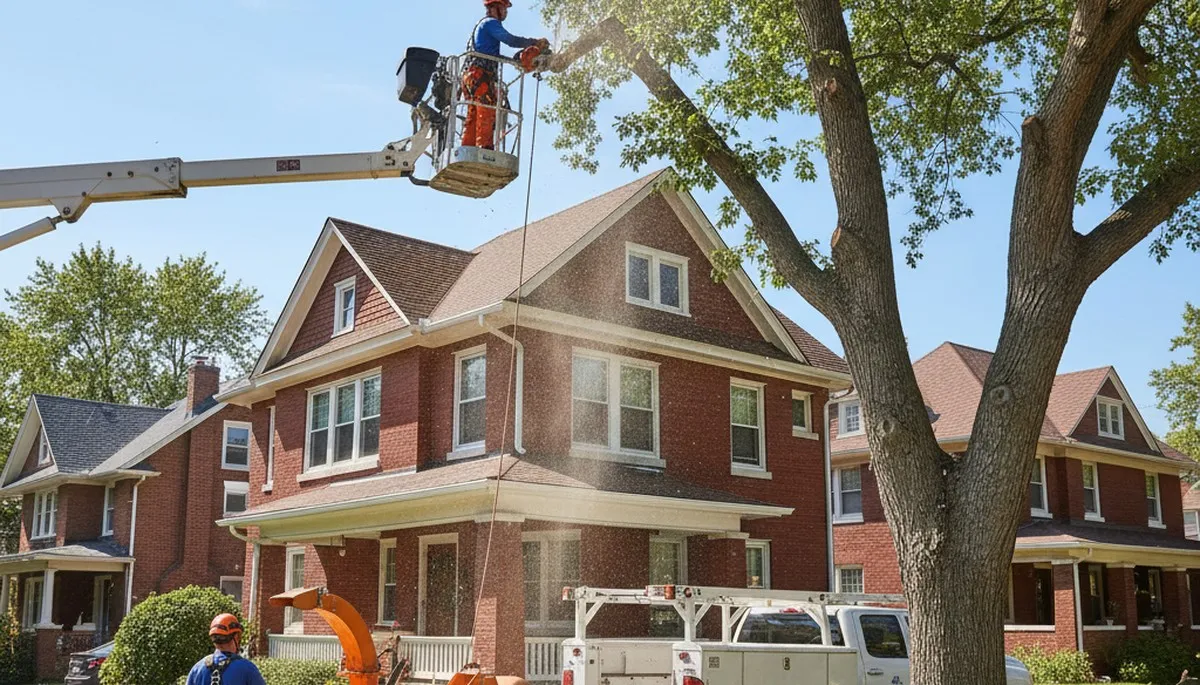
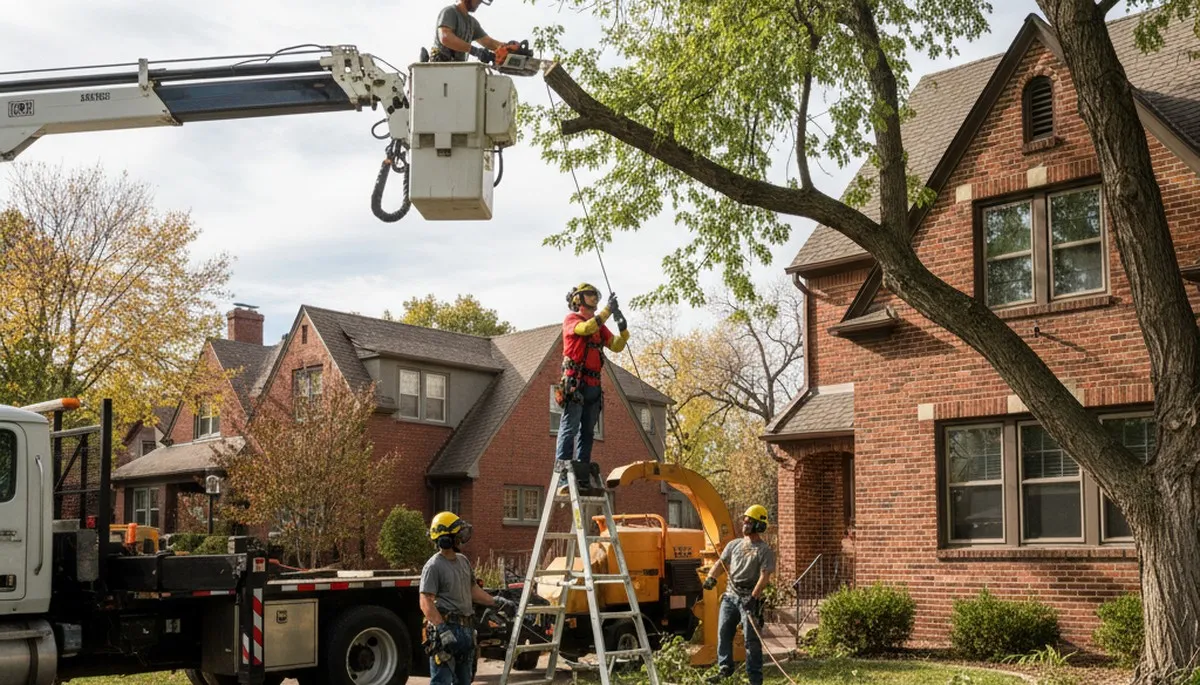
Experienced crews use aerial lifts, ground rigging, and sectional removal methods to clear debris safely and efficiently, even when storm conditions make access difficult in Denver’s denser neighborhoods.
Narrow Lot Access and Equipment Limits
Older Denver neighborhoods often have tight side yards, alley-access garages, and zero-lot-line homes, which can make large tree work harder to complete.
Local professionals rely on compact equipment and hand-climbing methods, along with careful property protection and neighbor coordination, to complete tree work without unnecessary damage to the landscape.
For help keeping your Denver property in good condition all year, request a free quote from a local professional in Denver by calling (303) 625-6875.
Every property should stay safe and accessible. Let Arbor Tree Care help maintain yours.

Kick off your tree service project today!

Tree Services in Denver, CO: Seasonal Care for Every Property
From routine trimming to 24-hour emergency response, local professionals help Denver properties stay safe, healthy, and manageable in every season:
Routine Tree Trimming and Pruning in Denver, CO
- Canopy thinning for large cottonwoods along parkway strips on streets like Federal Boulevard, where dense growth can raise wind resistance and increase limb failure during spring storms.
- Structural pruning for young street trees in new infill developments near RiNo and the Highland neighborhood, helping establish strong branch structure before defects develop.
- Clearance trimming near rooflines and gutters on historic bungalows in West Colfax, where overhanging branches can speed up moisture damage to aging siding and roofs.
- Elm tree maintenance in the Congress Park and Mayfair areas, where surviving American elms need careful crown management to support structural life and limit Dutch elm disease risk. Residents in nearby communities can also explore tree trimming services in Aurora, CO for consistent canopy care across the metro area.
- Seasonal pruning schedules timed to Denver’s late-winter dormancy period, which helps reduce the chance that fresh cuts will attract bark beetles and other opportunistic insects common on the Front Range.
Plan trimming and pruning before spring storm season arrives so your trees are better prepared and your property has less exposure to broken limbs.
Tree Removal Services in Denver, CO
- Removal of hazardous trees for cottonwoods and ash trees near homes in Park Hill and Montclair, where decay and pest damage can make them unsafe to keep.
- Storm-damaged tree removal after Front Range wind events, including split trunks and uprooted root balls, while protecting the surrounding landscape.
- Dead tree removal from tight urban lots in the Baker and South Broadway corridors, where standing dead trees can attract bark beetles that spread to nearby healthy trees.
- Alley-side tree removal in Capitol Hill and Curtis Park, where rear-lot trees may reach overhead utility lines and require sectional removal with ground rigging to avoid contact with infrastructure.
- Multi-tree removal projects for redevelopment near Sunnyside and Globeville, where overgrown lots are cleared efficiently and debris is managed according to Denver’s residential waste guidelines. Property owners in nearby communities can also find support through emergency tree services in Englewood, CO when urgent removal needs arise.
Removing dangerous trees at the right time helps limit pest spread, protect nearby healthy trees, and keep Denver residential properties safer as the seasons change.
Stump Grinding and Cleanup in Denver, CO
- Surface stump grinding for cottonwood and ash stumps left after removals in older Denver neighborhoods, where shallow root crowns make full extraction impractical.
- Below-grade grinding for stumps near sidewalks and driveways in areas like Platte Park and Rosedale, reducing tripping hazards and creating a cleaner surface for restoration.
- Root flare cleanup after stump grinding on properties where exposed roots have lifted concrete or cracked sidewalks, preparing the area for repairs or replanting.
- Debris hauling and site cleanup after stump grinding, leaving Denver residential lots free of wood chips and ready for lawn reseeding or new landscape plans.
- Stump treatment for resprouting species such as Siberian elms and Russian olives, which are common on older Denver lots and can send up aggressive shoots if the stump is not ground and treated properly.
Prompt stump removal helps reduce pest habitat, eliminates trip hazards, and returns usable yard space to Denver’s smaller residential lots.
Emergency Tree Services in Denver, CO
- 24-hour fallen tree response after wet spring snowstorms, which can load large-canopy trees with heavy accumulation and drop major limbs across driveways, roofs, and vehicles.
- Hazard limb removal after high winds along the Front Range, clearing partially attached limbs from homes in neighborhoods like Washington Park, Platt Park, and Bonnie Brae before they fall.
- Storm damage assessment and triage for properties with multiple damaged trees, focusing first on the most urgent hazards and helping with insurance documentation.
- Emergency root ball stabilization for wind-uplifted trees on narrow urban lots, helping prevent movement that could affect underground utilities, fences, or nearby foundations.
- Post-storm debris clearing from alleys and access points in Denver’s grid-style neighborhoods, restoring safe vehicle and pedestrian access after major weather events.
Because Denver weather changes quickly, emergency tree response is needed year-round. Local crews can move fast after a storm and restore safer access without unnecessary delay.